
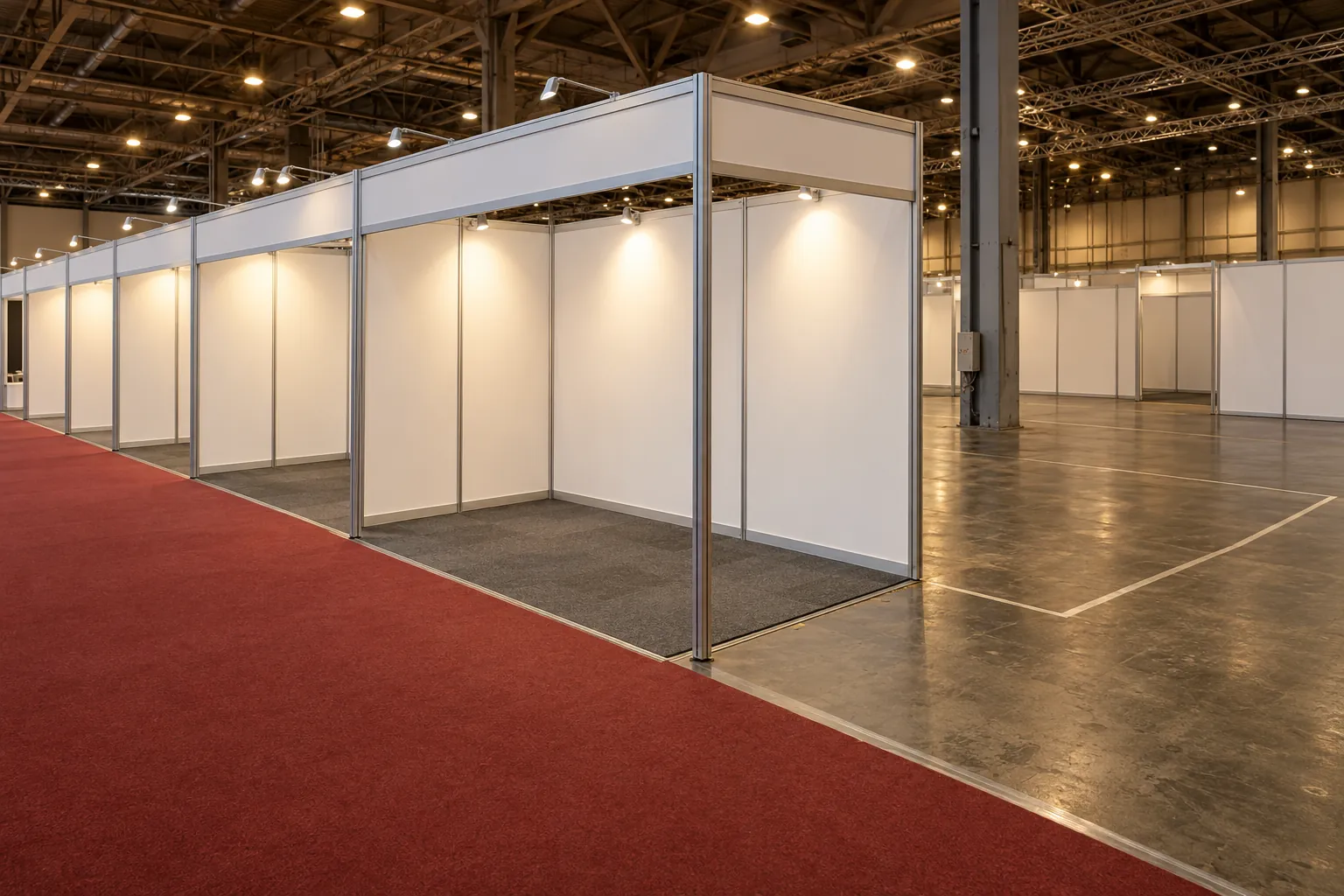
Most UK trade shows sell stand space in two forms. A shell scheme is floor space with a basic stand already built for you. Space only is bare floor, on which you or your contractor build the whole stand. The choice affects cost, design freedom, deadlines and how much your team has to manage.
What a shell scheme usually includes
A shell scheme is built across the hall by the organiser’s appointed contractor before exhibitors arrive. Packages vary by show, so read your contract, but a shell scheme contractor’s published package typically covers:
- Wall panels around the stand, with open sides where your stand faces aisles.
- Carpet or other flooring across the footprint.
- Baseline lighting and a power socket.
Ask whether a name board (fascia) with your company name is part of the package, and when the wording has to be submitted.
Furniture, extra power, graphics, AV and premium flooring are offered as upgrades ordered through the organiser’s contractor or online ordering system. Some organisers sell their package under a different name. Ask exactly which items are included in the price.
What space only means
Space only is a marked area of hall floor. You provide everything: structure, flooring, lighting, graphics and furniture, usually through a stand builder. You also take on the organiser’s design approval process, submitting drawings, structural information and risk assessments by the manual’s deadlines. Electrics, rigging and utilities are still ordered through the routes the venue and organiser specify. At the NEC, for example, electrical work is done by the organiser’s nominated contractor, and services are positioned from the stand plan you submit.
How to choose
A shell scheme suits a first exhibition, a small footprint or a show where you are testing the audience. Your costs are more predictable, the build is done for you and you can concentrate on graphics, staffing and follow-up.
Space only suits a larger footprint, a demonstration that needs particular structure or services, or an exhibitor who returns to several shows with a reusable stand. It gives far more design freedom, but the total cost and the management time are higher, and the deadlines arrive earlier.
- Budget: compare the shell scheme package price with space plus build, graphics, furniture, transport, services and storage. Our budget guide lists every line.
- Design: shell scheme walls may not take heavy fixings or wall-mounted screens. Check the organiser’s rules before ordering graphics or displays.
- Time: space only needs drawings approved and contractors booked well ahead. A shell scheme mainly needs artwork and orders by the manual’s deadlines.
- Reuse: a modular or bespoke stand can travel to future space-only bookings. Shell scheme graphics can be reused only if the panel sizes match.
Making a shell scheme work harder
Most of the impact on a shell scheme comes from graphics and layout. Measure the actual panel sizes in the manual before printing, keep the open side clear for conversation, and use counters or display units that fit the floor area after people stand in it. Portable displays and stand kits, such as those listed in our displays and graphics suppliers, are designed for this. Check whether the organiser allows freestanding units above the wall height.
Moving to space only
When you move up, write a proper brief, collect comparable quotes and confirm who submits what to the organiser. Our guide to briefing a stand builder covers the brief, and planning stand delivery and installation covers the logistics.
Sources
- Exhibit 3Sixty shell scheme stand packages (contractor description)
- NEC exhibitor FAQs (electrical contractor, stand plans)
- Spring Fair stand applications
Sources checked 19 October 2026. What a package includes is set by each organiser’s contract and manual. This is editorial planning guidance based on published sources, not an account of exhibiting at a particular show.