Several exhibitions can share a venue and dates without sharing the same audience, admission rights or exhibitor package. Check the boundaries before booking.
A shared date is not a shared booking
The NEC’s published calendar lists LAMMA, Low Carbon Agriculture and Crop Tec for 20–21 January 2027. It also lists The Workplace Event and The Health & Safety Event for 27–29 April 2027. Those schedules create an opportunity to combine visits, but matching dates alone do not establish what a ticket, stand booking or lead system includes.
This desk-research guide uses the venue listings as evidence of scheduling. It does not claim that one registration provides access to every associated exhibition. Admission and exhibitor rights must come from the organiser’s current terms.
Check the visitor journey
Ask whether the registration covers each named show, whether any sessions require a separate booking and whether visitors can move between halls without another check-in. Confirm opening hours rather than assuming every co-located event follows the same timetable.
Build a short list of exhibitors and sessions in each area. Then estimate the practical route between them using the current floor plan. A theoretically convenient combined visit can become unproductive if meetings are spread across distant halls or scheduled back to back.
Check the exhibitor proposition separately
For an exhibitor, the relevant question is not simply how many people could be in the building. Ask which audience the booked show attracts, how visitors reach your hall and whether your package includes promotion to another event’s registrants.
Treat any combined attendance figure carefully. Ask whether it counts unique people, repeat visits or total entries across several shows. Do not divide a portfolio-wide headline by your stand cost and call it the cost of reaching a relevant buyer. The definitions matter before the arithmetic.
Agree what happens to contacts
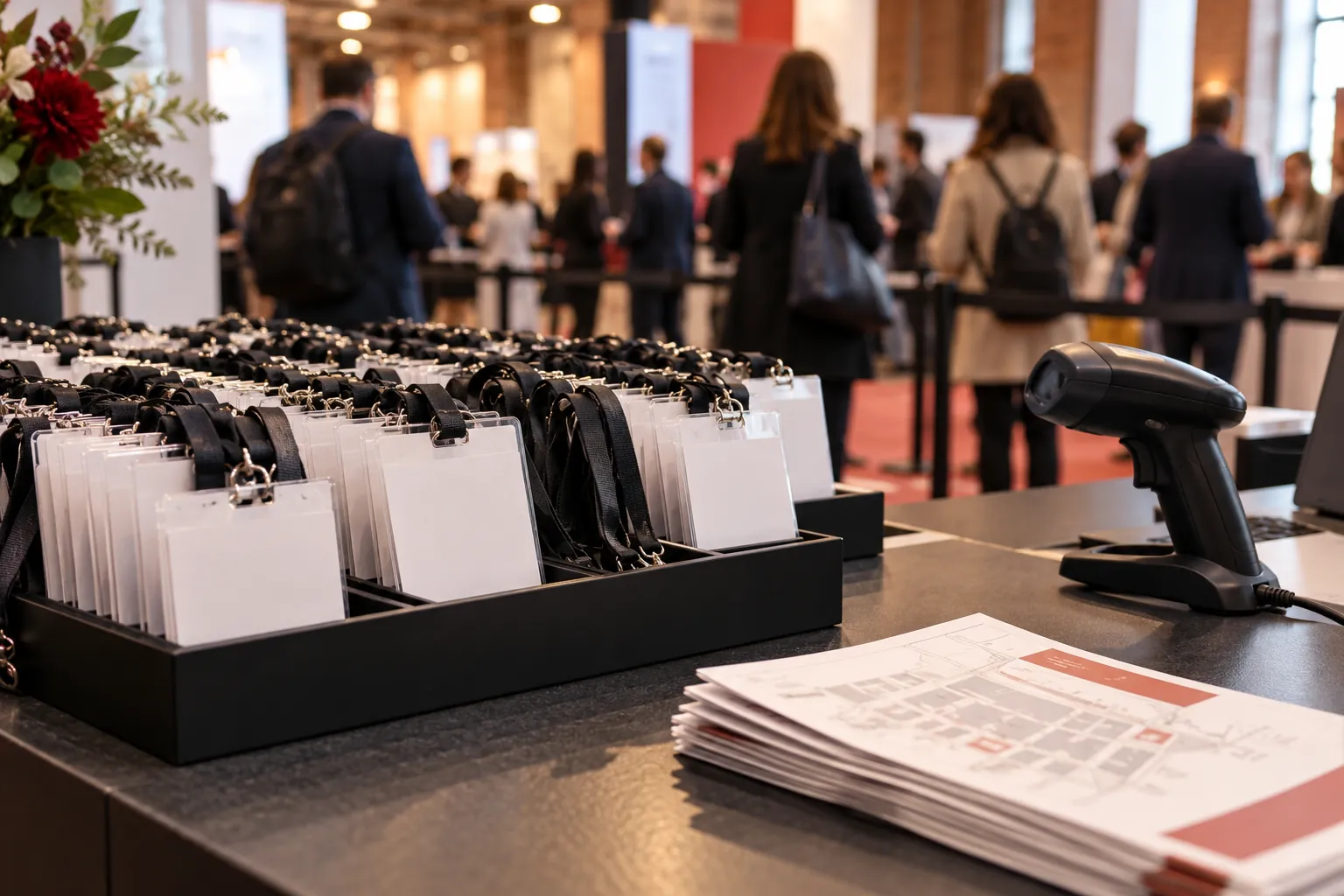
Check whether badge scanning works across the relevant shows and what information is released to an exhibitor. Confirm the rules on attendee data, follow-up and sponsor access rather than assuming a shared venue implies a shared database.
The final booking brief should name the show, the hall, the stand package, the access rights and the source of each promise. That gives the team a usable plan and makes a later discrepancy easier to resolve without confusing one organiser’s offer with another.
Sources
- https://www.thenec.co.uk/events/lamma/
- https://www.thenec.co.uk/events/low-carbon-agriculture/
- https://www.thenec.co.uk/events/crop-tec/
- https://www.thenec.co.uk/events/the-workplace-event/
- https://www.thenec.co.uk/events/the-health-safety-event-2027/
Desk research; public sources checked 2026-10-19.